> Public ROOM Sarajevo / Bosnia-Herzegovina
*1981, lives and works in Austria and UK
5-6th July
It was just after midnight, when I arrived in Sarajevo, the European Jerusalem or the Damascus of the North* as the multi-ethnic city home to many faiths used to be called in the past. There had been a massive delay in Vienna. And so it was already the 6th of July, when I finally left the arrival hall and stepped into a warm summer night in Sarajevo. We had to wait for hours on board the aircraft in Vienna, after the pilot had announced ‘navigational problems’. I was surprised to hear that there were many mountains on the way to Sarajevo – which was why he, the pilot, said he’d refuse to take off before the technical issues were resolved. Other than that it was a boring flight, which I hardly remember. Yet I will not forget the relief I felt to finally feel the ground under my feet in Sarajevo – the city whose only connection to the world had been the very same airport during the 1.425 day long siege.
* Ironically, today some Bosnian bloggers compare the situation in certain cities in war-torn Syria to their experiences of Sarajevo during the siege: Aleppo – the Sarajevo of the South?
8th July
One of the first people I meet in Sarajevo is Sandro Drinovac, who works in the Design Department at the Academy of Fine Arts in Sarajevo. Over coffee, Sandro gives me lots of helpful suggestions about what to see and do in the city and I get a first taste of Bosnian hospitality. The atmosphere in Baščaršija, the old Ottoman-influenced part of town, with its mosque, cafés, and buzzling craft markets and souvenir shops reminds me of Istanbul. So does the taste of ‘Zeljanica’, which in Turkish, we’d call ‘ıspanaklı börek’* On the touristic menu this local speciality, not very accurately, translates into ‘spinach pie’. Call it as you like, this is soon to become my favourite snack in Sarajevo.
In the evening I join an opening at Duplex100m² gallery, as was recommended by Sandro. Walking up the stairs to the gallery, which is set in an Austro-Hungarian apartment by the Miljacka River, for a moment, I feel transported back to Vienna. Entering the space and hearing Bosnian, not Viennese, I quickly realise, where I am (and am not) located, at least physically. The exhibition is called ‘Kupujmo domaće!’, which google translates into ‘Buy local’. The space is packed, and so are the walls – showcasing works by Bosnian artists. I recognize some iconic works, e.g. Šejla Kamerić’s ‘Bosnian girl’
The graffiti overlaid on top of the artist’s self portrait reads “NO TEETH…? A MUSTACHE…? SMEL [sic] LIKE SHIT…? BOSNIAN GIRL!” The text was written “by an unknown Dutch soldier on the wall of the army barracks in Potočari, Srebrenica 1994/95”, a note at the bottom of the image explains. A few days later, I will re-encounter the ‘unknown Dutch soldier’s’ disturbing graffiti on photographs exhibited at gallery 11/07/95, which is preserving the memory of the Srebrenica genocide.
After standing around awkwardly on my own, taking sips of red wine, I am relieved to buu-ump into Dante Buu, a Sarajevo-based artist, who had been the artist-in-resident at <rotor> in Graz. ‘Welcome Mustafa, to the life you deserve!’ Dante introduces me to Lejla Hodžić, who – as it turns out – had been part of the jury who selected me for the residency. Our animated conversation continues at the nearby bar/restaurant Delikatesna Radnja, where we are joined by Dante Buu and Lana Čmajčanin , another local artist whose critical cartographic practice resonates strongly with me. The subject of conversation quickly turns to the war and the siege of Sarajevo, during which, they say, the arts flourished. I am impressed and touched to hear how the artists in Sarajevo had stayed resilient during the siege and even staged exhibitions despite the heavy shelling of their city. As a friend put it, “It’s a bitter paradox that pain makes art shine“.
*Much to my surprise, I learnt that Turkish ‘börek’ does not equal Bosnian ‘burek’, which exclusively designates the meaty version of this delicious pastry dish.
10th July
Lejla invites me to join her on a tour of Sarajevo. It becomes an epic trip and guided tour of the city, a memorable experience, which will later inspire significant changes to my initial project idea. Lejla is driving, whilst introducing and translating the complex layers of Sarajevo’s history to me, the foreign guest/ artist-in-residence. How funny, I think to myself, that this residency program is called “West Balkan calling”. I recall how my recently deceased German grandmother, may she rest in peace, used to say that the Balkans began in Vienna: ‘In Wien beginnt der Balkan’. Just to be clear, she did not mean that as a compliment. Identifying as Viennese by birth, I choose to have my own interpretation. What is East? What is West? I suppose it is all a matter of perspective.
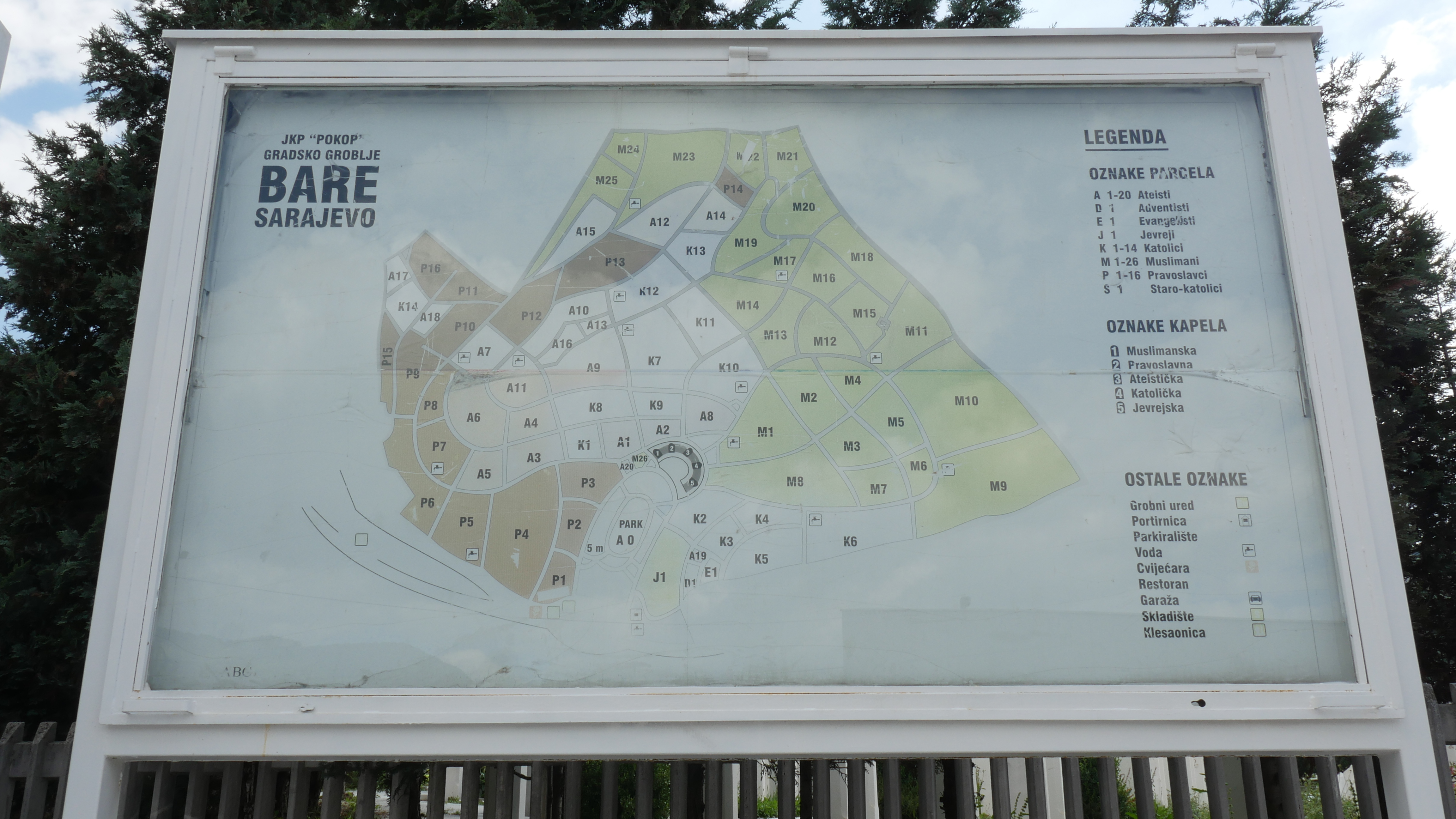
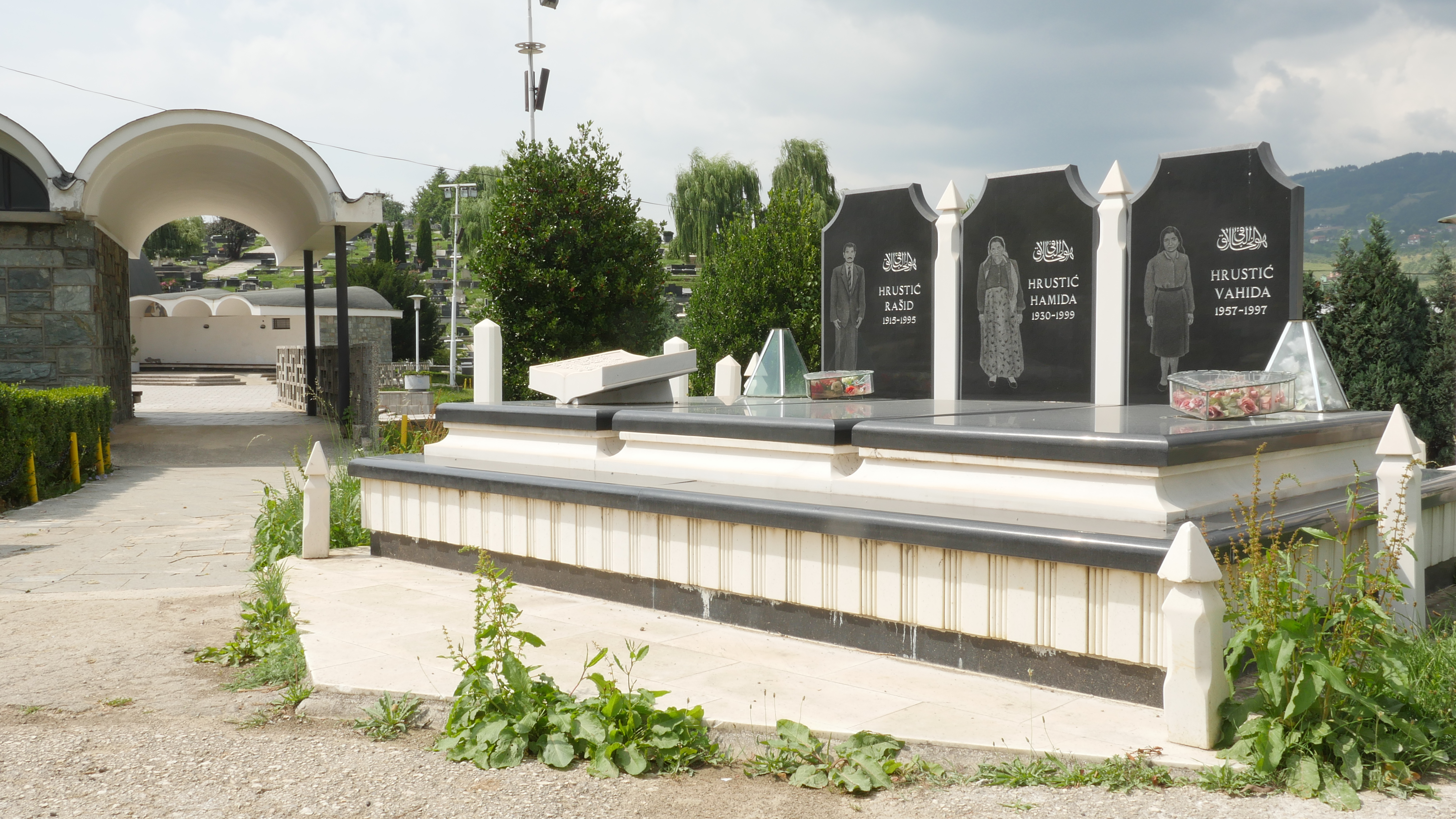
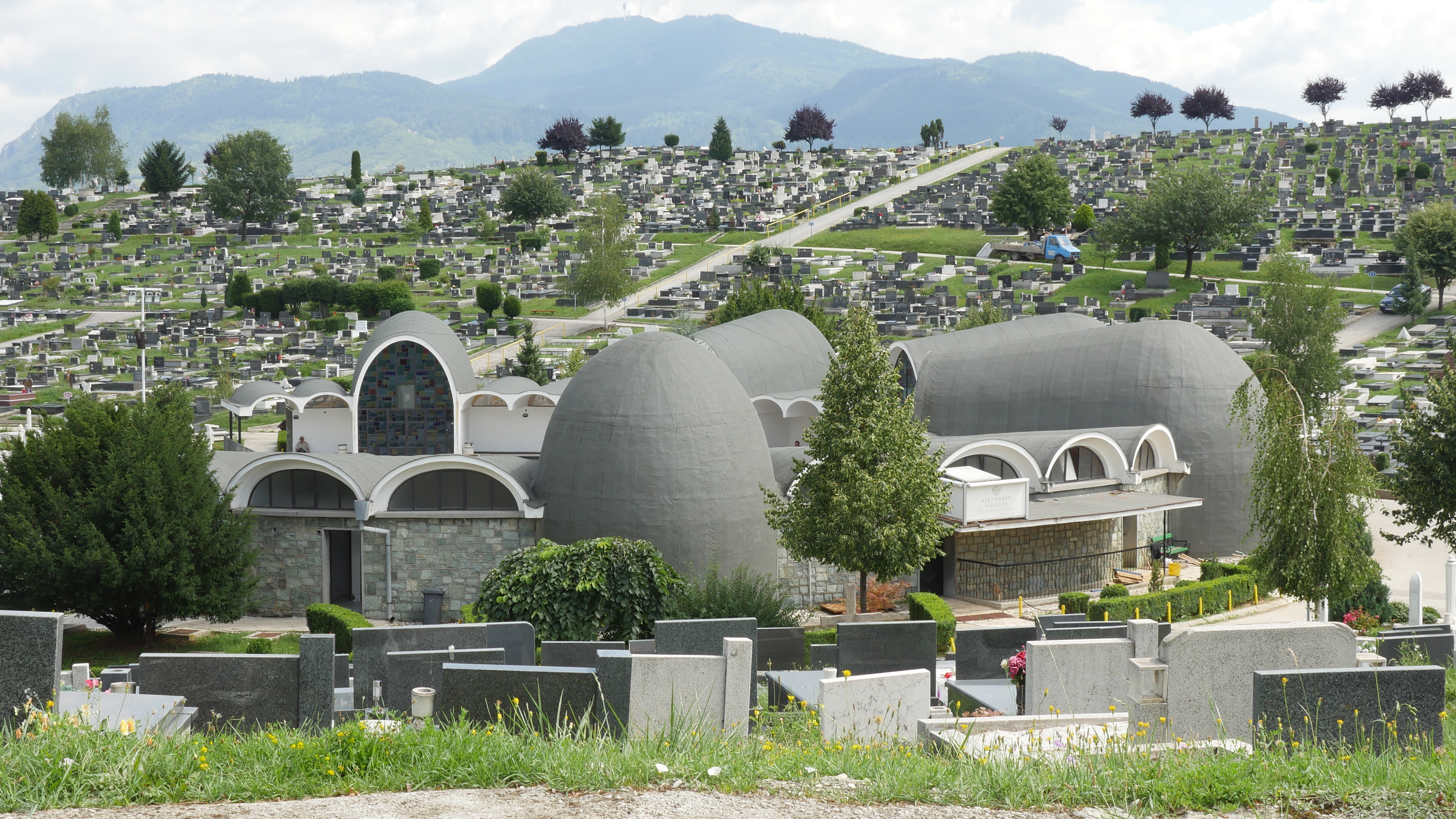
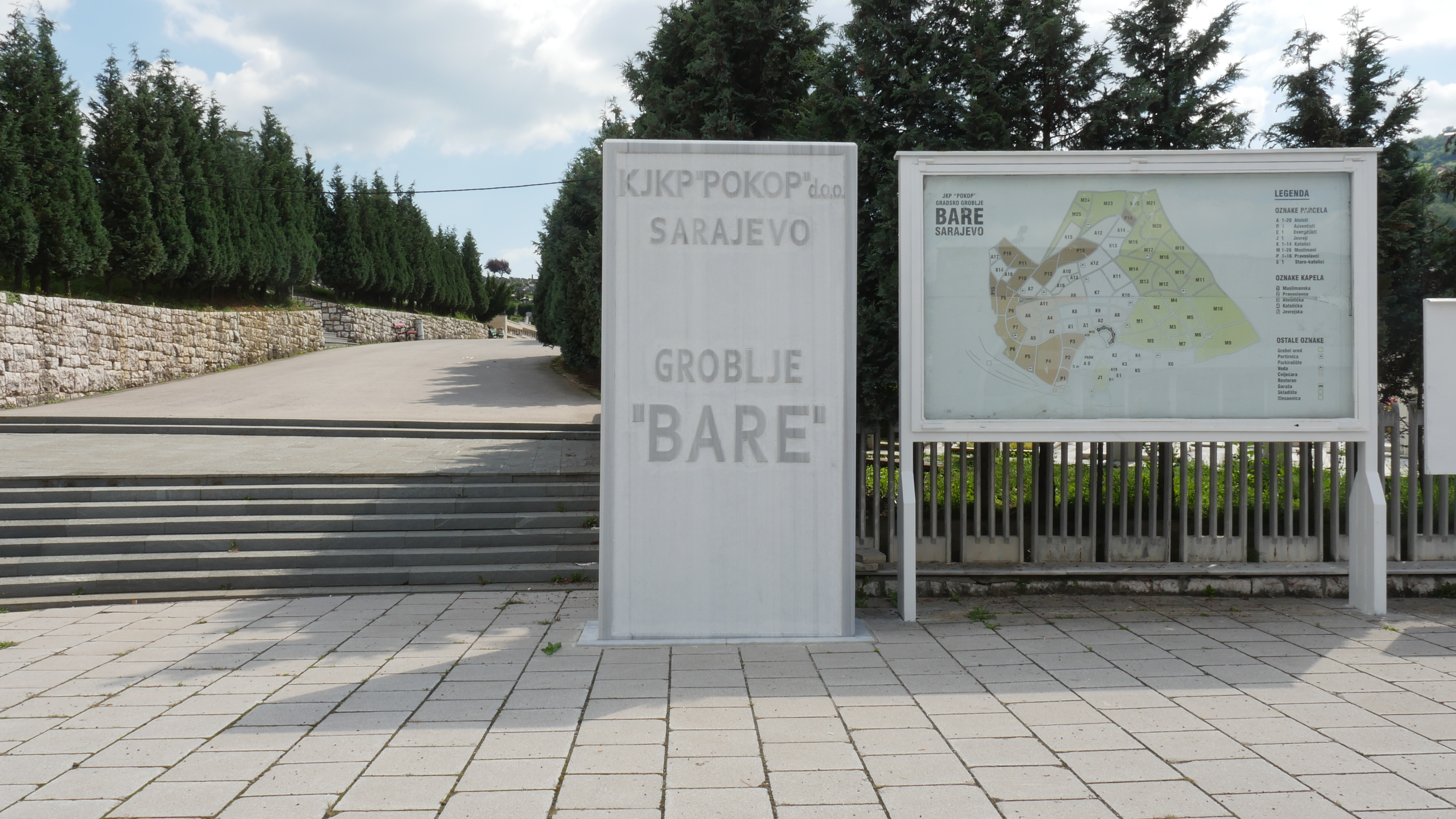
Our first stop is Bare cemetery, also known as ‘city cemetery’, which I learn is said to be one of the largest cemeteries in Europe. It is around noon and blazing hot, as we slowly make our way to the chapels at the central part of the cemetery. On the way, Lejla points out some graves to me. Our visit to the cemetery is by no means morbid, in fact, contemplating the graves and listening to their stories, makes me feel more alive than visiting an art fair (an activity which I find highly depressing and normally try to avoid at great cost).
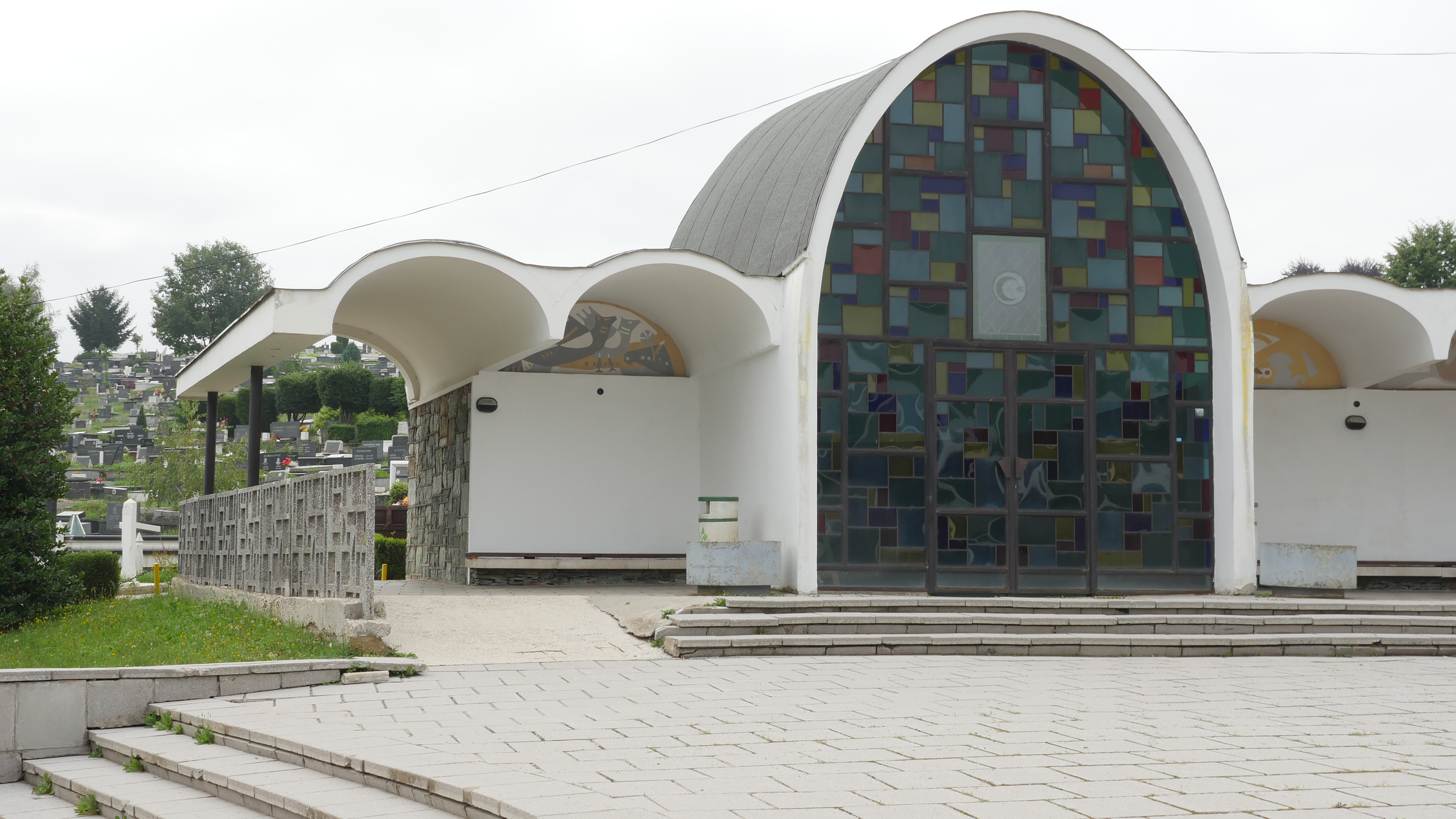
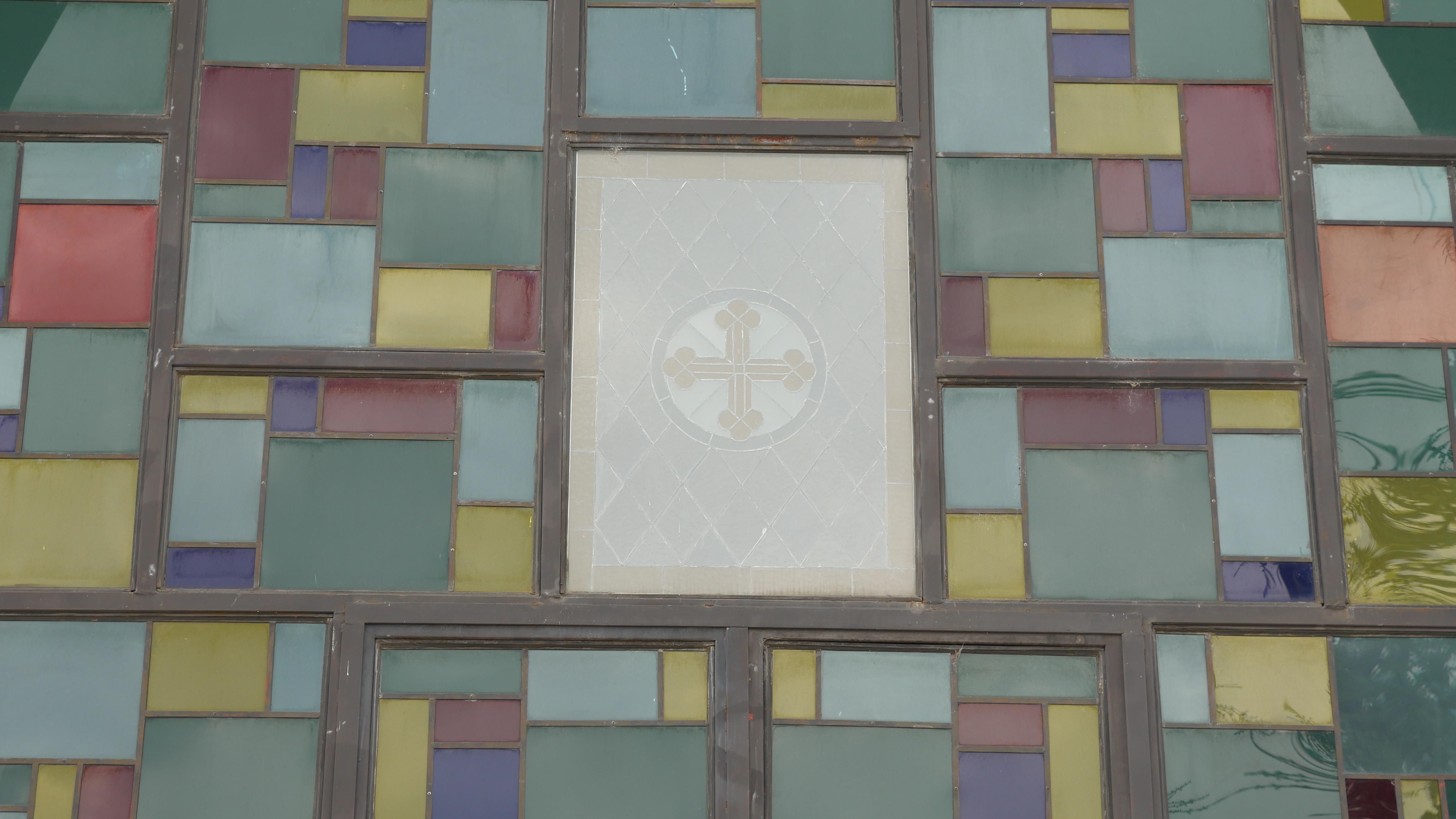
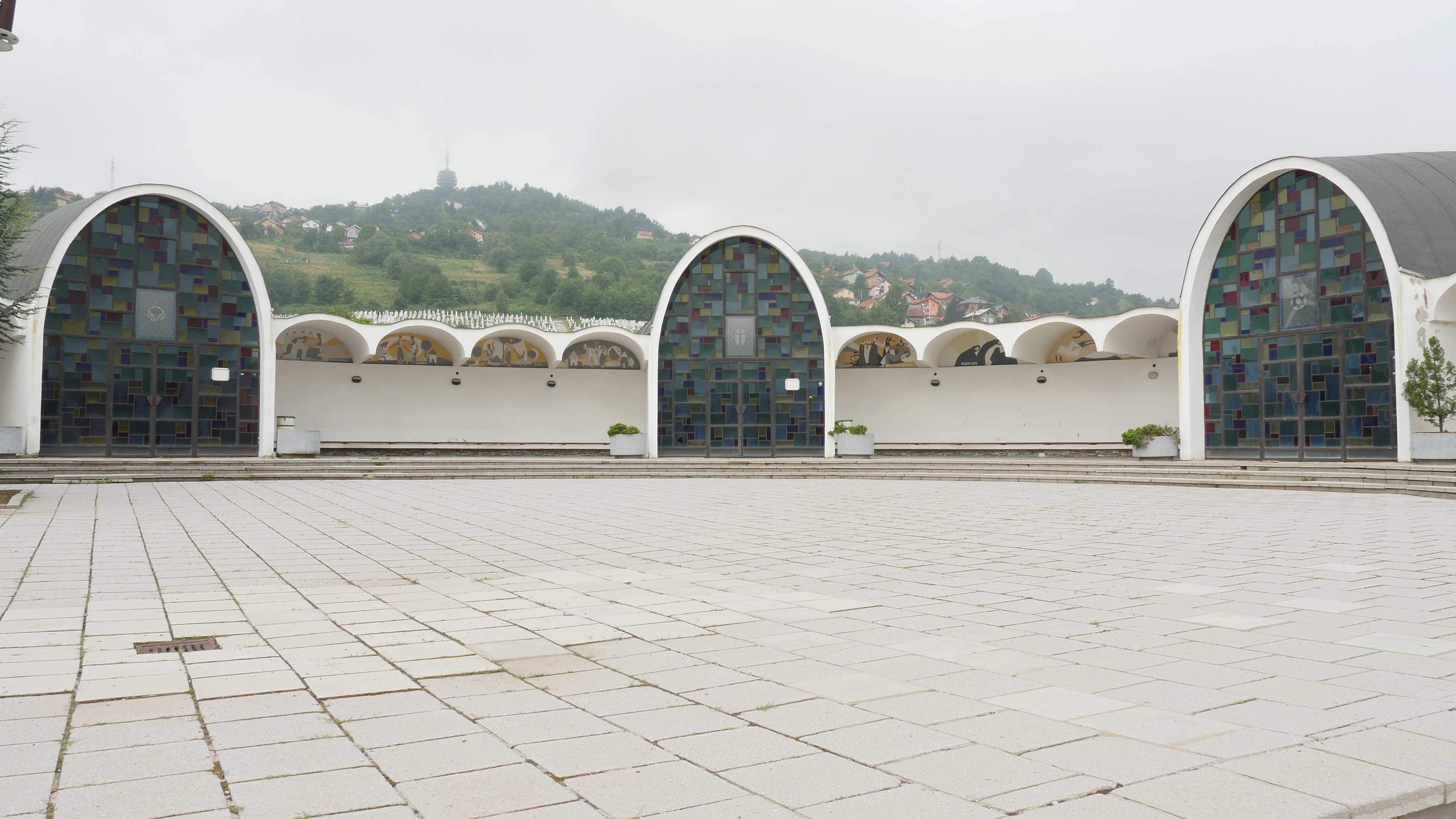
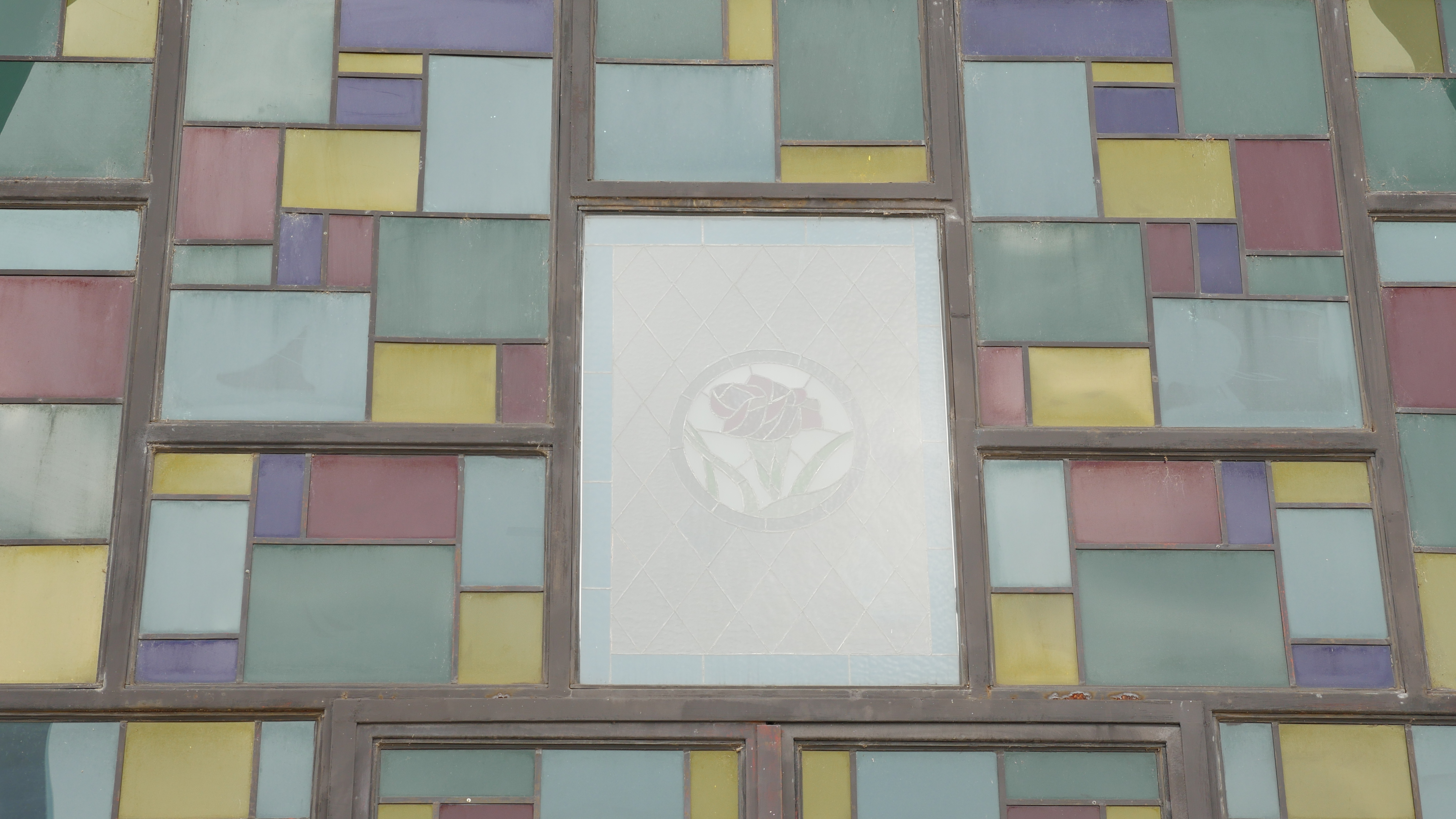
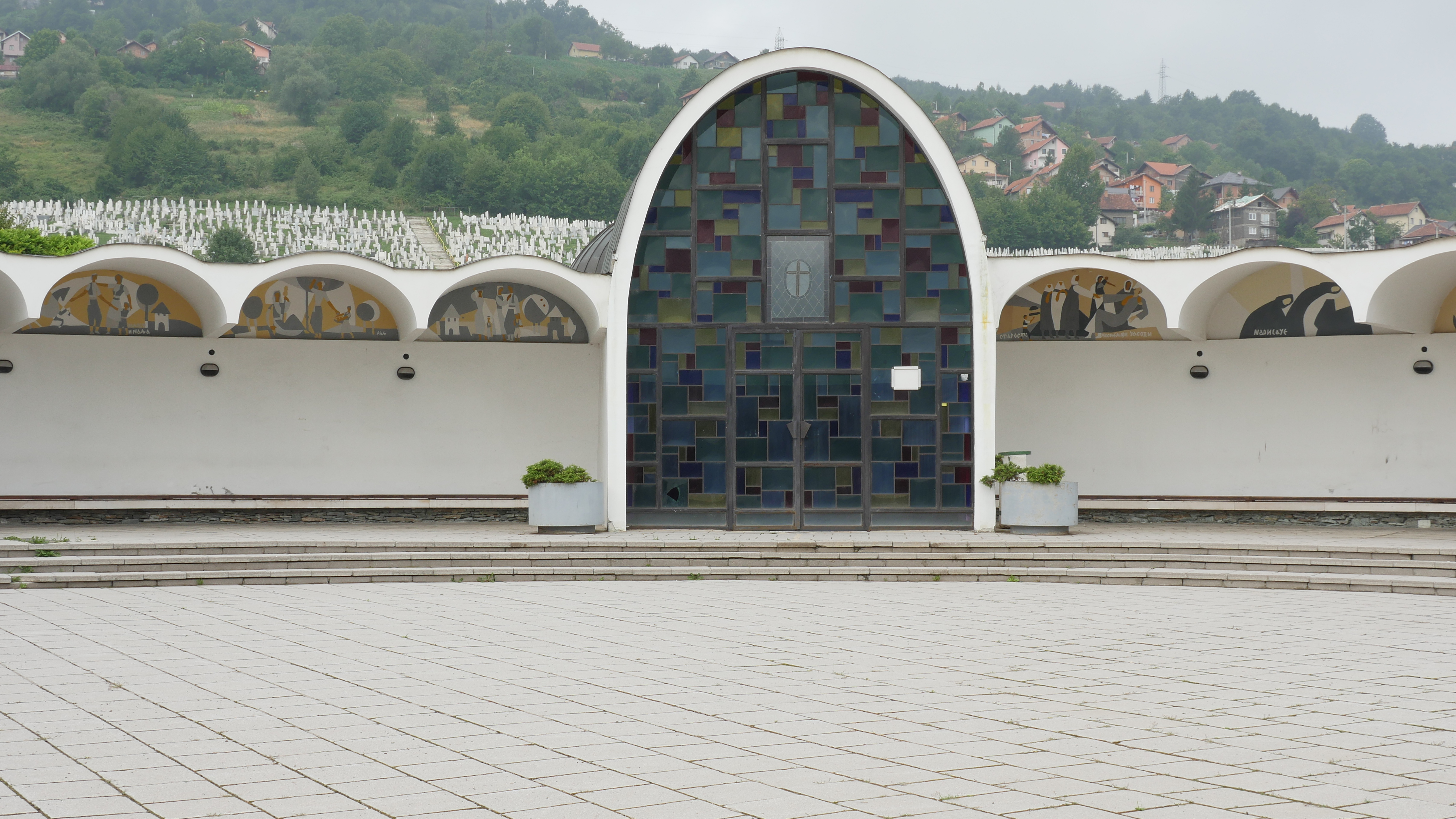
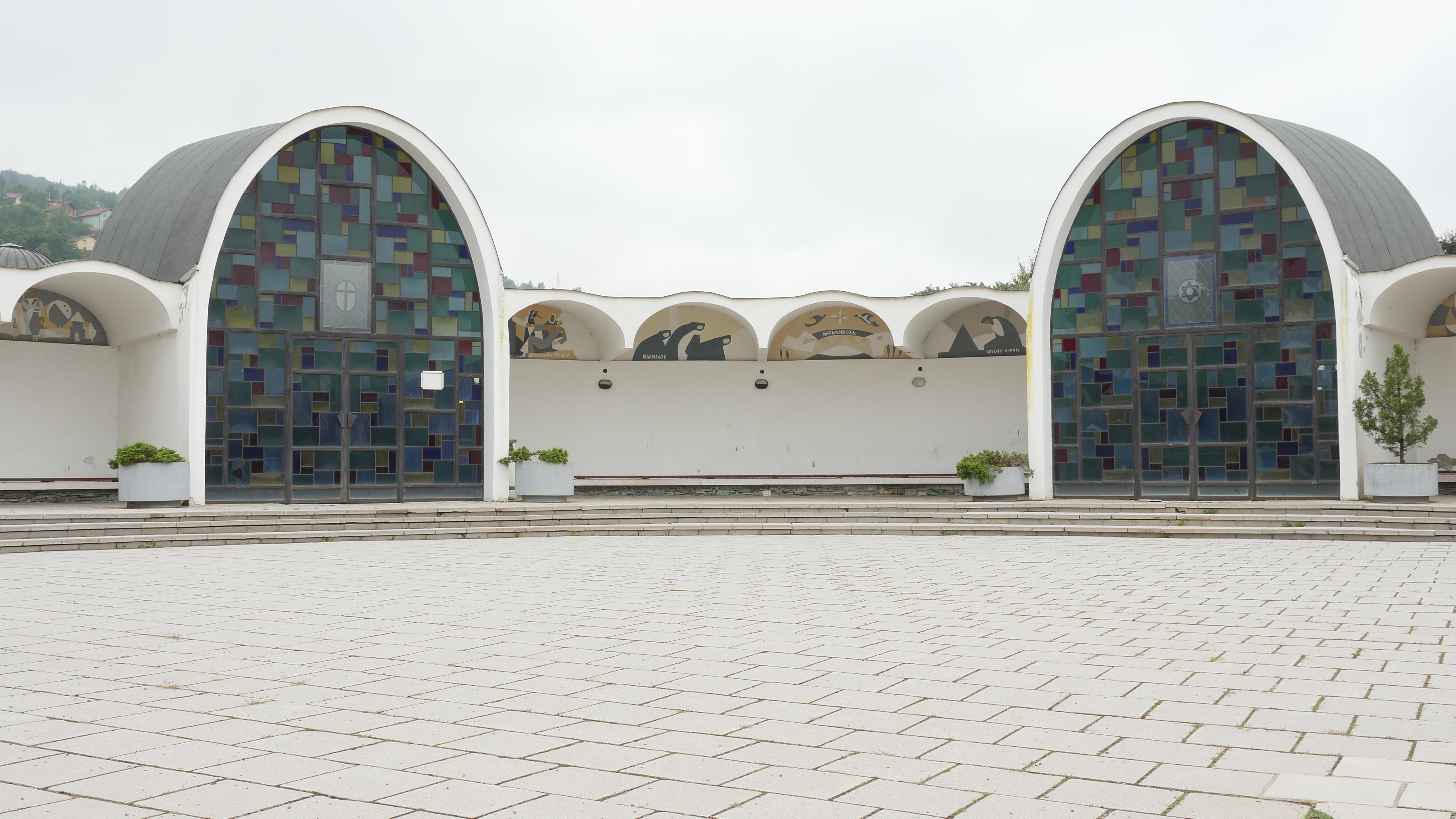
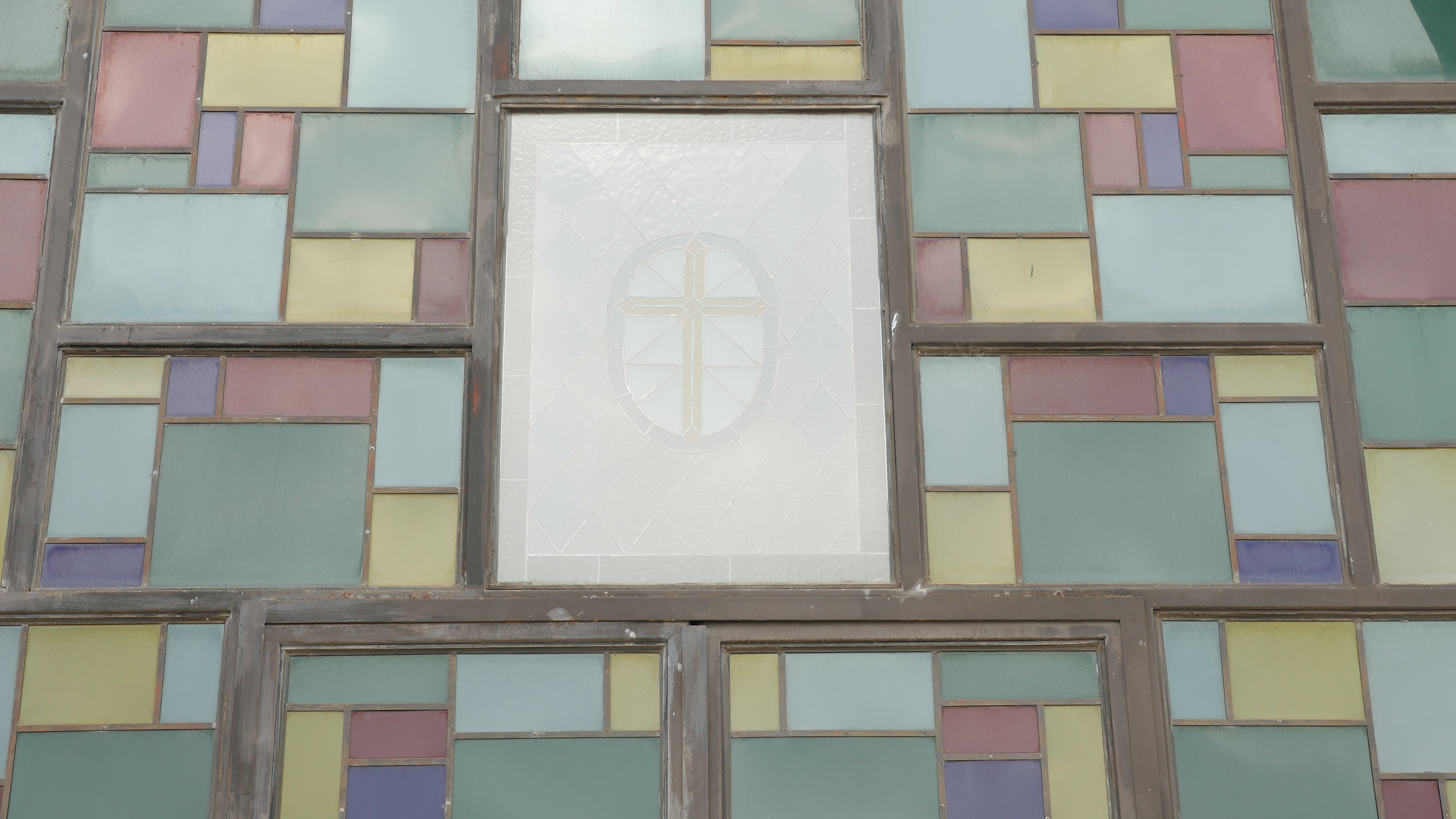
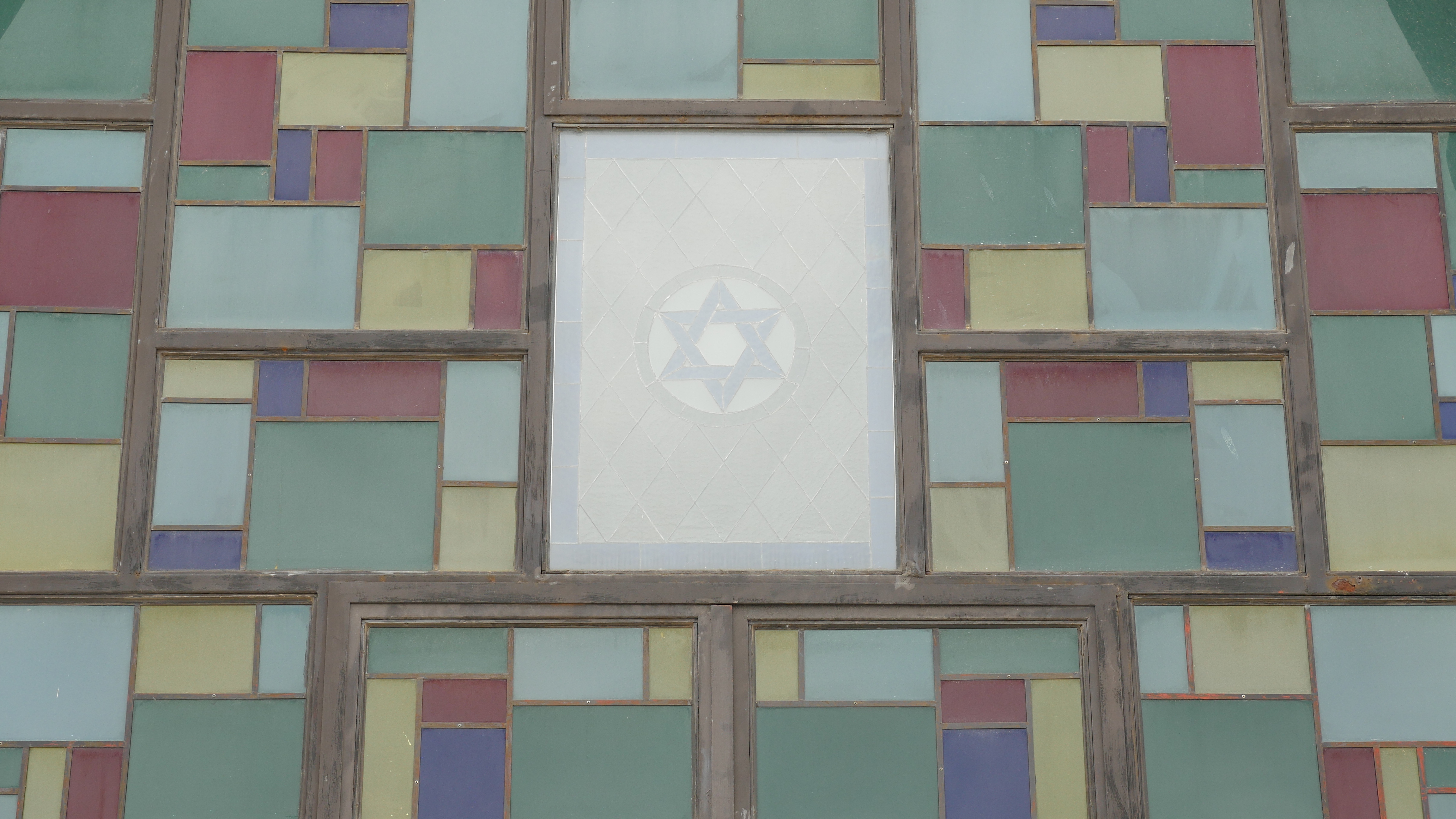
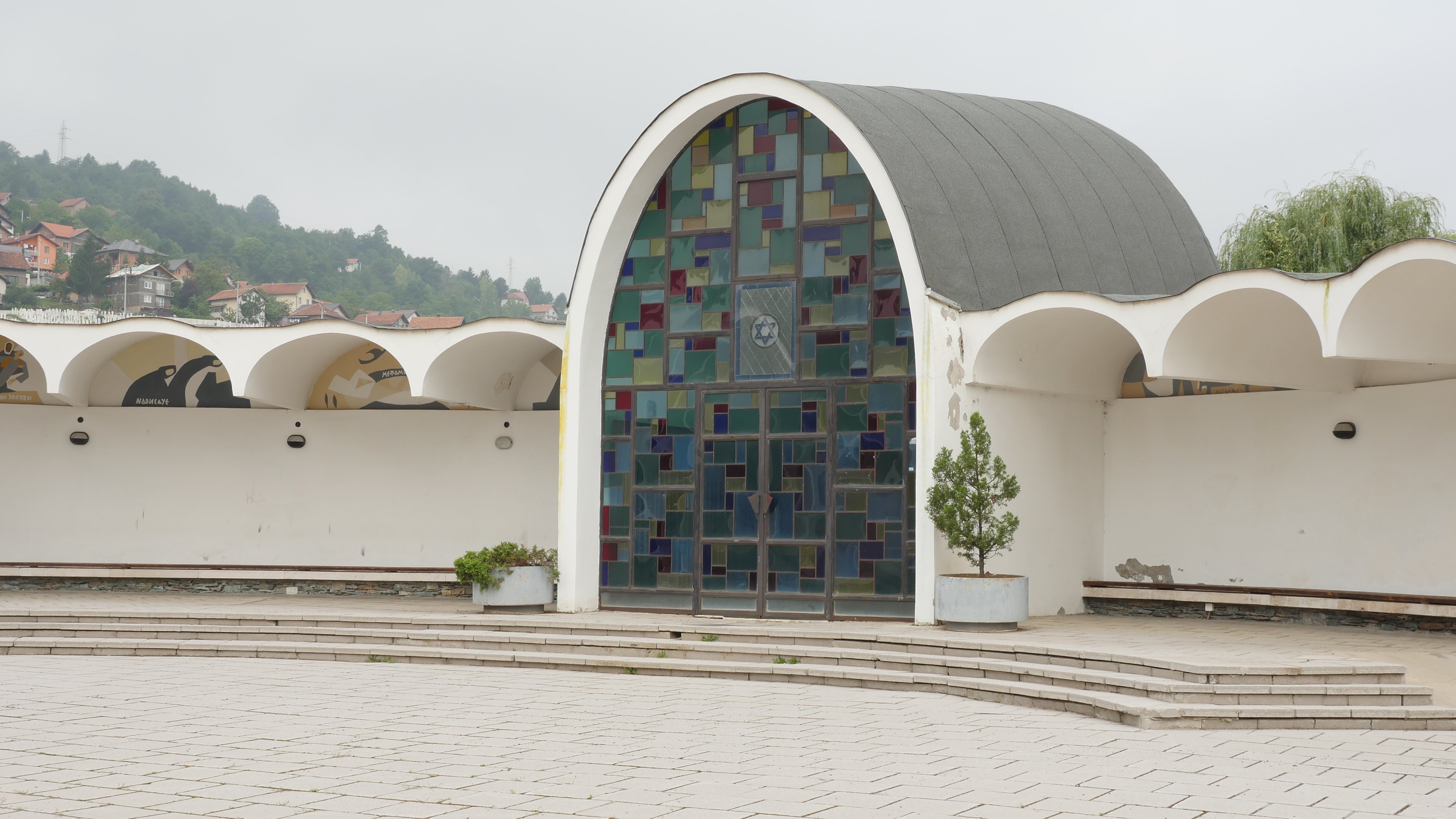
Sarajevo’s multi-faith heritage and diversity is mirrored by the cemetery’s different compartments and designated chapels: Atheist, Catholic, Jewish, Muslim and Orthodox (in alphabetical order). As we approach the central part of Bare cemetery, I feel strangely touched by the architectural composition of the chapels, which are in fact interconnected. How bizarre! I have never seen anything like this before. What strikes me most is that these five chapels, where the funerals take place, look like clones of each other. In fact, they’d look exactly the same, if there were not stained glass plates depicting the symbols of the different religious (or non religious) groups, placed above the chapels’ entrance. The Muslim crescent moon, the two distinct crosses representing the Catholic and Orthodox branches of Christianity, the star of David, and the red carnation, a symbol for socialism and the labour movement, have been inserted into the Mondrian-like colourful and geometric designs of the stained glass windows.
By now, it is getting too hot and we decide to leave the cemetery to continue our tour of the city. I did not take any pictures. How to communicate, translate, share this experience?
11-17th July
I spend the week exploring various sights and museums in Sarajevo. Visiting the numerous coffee shops in Baščaršija, it gradually dawns on me that my initial project idea is not feasible. When I applied almost a year ago for this residency, I had proposed a project in relation to coffee and its cultural history, exploring regional differences and nationalistic claims in relation to the naming of coffee: Turkish coffee, Serbian coffee, Bosnian coffee, Croatian coffee, Greek coffee etc. Here in Sarajevo, at least in the places I have visited, this particular type of coffee is generally referred to as ‘Bosanska’ – ‘Bosnian’ coffee. While I am intrigued by the distinct way of serving and drinking coffee in Sarajevo and the many rituals attached to the consumption of coffee, what I had imagined on paper before coming here, does not seem to make much sense. When I voice my concerns to Mak Kapetanović, the founder and facilitator of Public ROOM Sarajevo, he completely understands. I decide to follow my gut instinct and begin to conceive a completely new project. As you can probably guess from my previous post, my new project idea will soon bring me back to Bare cemetery, the eternal resting place for over hundred thousand Sarajevans.
18-24th July
I take a local bus and make another visit to Bare cemetery, where I begin to gather some visual material, in the form of photographs and short video clips. The categories and divisions, which were created in life, based on different religious orientation, are mirrored in the cemetery’s architecture. There are however some sections which appear to be mixed or graves, which seem to transgress any clear categorization. I cannot help but think that from the moment we are born, we all face the same fate: death – our final migration.
In hindsight my desire to explore this theme was probably influenced by the view of my apartment in Sarajevo, which overlooks one of the cities’ many cemeteries. In contrast to other cities in Europe, where cemeteries are usually located at the outskirts of the city, life and death feel more closely intertwined in Sarajevo. As became evident in my audio-interview with historian Nihad Kreševljaković, there would be even more layers to this, if I were to consider the tough reality of makeshift burials in the city during the war.
Looking through the visual material I recorded at the cemetery, I am not satisfied at all. I realize that a sound (and light?) installation may prove to be a more powerful medium to convey my experience of Bare, reflecting Sarajevo’s past and present multi-faith make-up. I envision to create a composition of various prayers and/or music, which would be recited at the chapels during funerals of the five respective faith groups: Atheist, Catholic, Jewish, Muslim and Orthodox (in alphabetical order).
At our next meeting I ask Mak how I could go about contacting religious representatives, who’d conduct the funeral service for the aforementioned groups. I am worried that it might be especially difficult to establish contact with the Jewish community. And how I am proved wrong! A phone-call from Mak and Igor Kozemjakin, who acts as the Jewish community’s cantor, immediately agrees to participate in my project. A few days later I meet Igor at the Jewish community center at the Ashkenazi synagogue.
In fact, the Sephardim, who had been expelled from Spain in 1492, were the first Jews who found refuge here, when they were invited to settle in Sarajevo during the Turkish-Ottoman rule. Following the Austro-Hungarian Empire’s expansion, Yiddish-speaking Ashkenazi Jews joined the community. It is said that at the end of World War I, Sarajevo was home to more than 12.000 Jews. Nearly all of them were murdered during the Holocaust.
Igor’s chanting of the traditional funeral prayers in Hebrew fills the synagogue. I am recording his voice with a directional microphone, hoping to capture his solemn and dignified recital of the psalms and the acoustics and ambience of the space. I do not take any pictures.
25-31st July
Following Lejla’s suggestion, I ask the funeral company Prokop whether they could put me in touch with one of the musicians, who they’d usually book to perform at Atheist funerals. Even though communication in English is difficult and I have to wait for a while, I am given a name and a phone number. Shortly after sending a text message, I receive a call by J., a young trumpet player, who is part of the Sarajevo Philharmonic Orchestra. J. sometimes also plays at funerals. He asks me not to publish his name, which is why I am using ‘J’ as a made-up initial.
We agree to do the recording at Public ROOM, my temporary studio, early on Monday morning. J. will play three pieces from his Atheist funeral music repertoire. Following my brother’s professional ‘viber’-advice I install my microphone approximately four meters away from J. and adjust the audio levels to his instrument. I am anxious whether I will be able to do a good recording of the trumpet sound. J. plays four songs: ‘Uvelo lišće’, ‘Fala’ (Thank you), ‘Silencio – Tišina’ and ‘Do groba’. These are all pieces, which are usually played at Atheist funeral services, he says. The acoustics in my studio at Public ROOM gallery, which once upon a time, was known as the ‘Evergreen bar’, are quite good and the recording turns out to be festive and beautiful.
Through Ensar Sulejmanagic’s help I am invited to record Imam Nurif ef. Herić, who agrees to recite the Muslim funeral prayers. He welcomes us in the garden of Hadži Džaferova džamija, a charming old mosque with a wooden minaret dating back to Ottoman times. Although it is a very hot day, I am carefully observing the traditional Islamic dress code, wearing a long sleeved top and long trousers. I cover my hair with a pink scarf, as we take off our shoes to enter the mosque. I suddenly worry how I will manage to put on headphones over the scarf during the sound recording. But I smile and try not to show my nervousness. In fact, Nurif efendi, who jokes that his name translates to ‘Mister Light’ from Turkish ‘Efendi’ and Arabic ‘Nur’, seems quite relaxed – so I quickly forget my worries. I set up the microphone and after awkwardly putting the headphones on over my scarf and adjusting the audio levels in my recording device, I signal that I am ready to record. Nurif ef. who is sitting on his knees in a prayer position, takes a deep breath and begins to recite the verses from the Koran in Arabic. I decide not to worry about the audio levels and close my eyes. The Imam’s voice is incredible and transports me to another place. Whilst I wish for my ashes to be distributed over the oceans, (a very large) part of my family is Muslim and will be buried accompanied by these very same prayers. Nurif efendi recites the Koran so beautifully that it could make one cry. I suddenly remember how brief my existence on earth will be.
4th Aug
It is just after midnight. I am standing on the balcony of my apartment overlooking the cemetery. The dogs of the night are howling their good-byes. My residency is coming to an end. I find it hard to believe that I will be leaving Sarajevo in the morning. Most people I met here have already left the city. It is high holiday-season. Those, who can, escape the heat and leave for the coast.
Sadly I have not heard back from the Orthodox priest, whose contact had been given to me by Lejla. I had tried to call and wrote several messages to him over the last weeks to ask if he’d be able to participate in my project. No response. Hoping to find him there, I have also been to the old Serbian Orthodox Church – the ‘Church of the Holy Archangels Michael and Gabriel’ – several times. The small, medieval Church is located in midst of a cute little garden, a hidden oasis in the buzzling old town. The Church is home to an impressive collection of Byzantine-style icons and has partly been converted into a museum, with an adjacent wine shop. Needless to say that I also tried to ask the lady at the reception about the priest, but unfortunately my inability to speak the local language made communication impossible. I am ashamed to admit that my Bosnian is limited to a few phrases, such as ‘dober dan’ and the like, apart from some common words we share in Turkish or Austrian; for instance, to my great surprise I learned that in Bosnia tomatoes are also called ‘paradeiser’ – fruits of ‘paradise’– as they are called in Austrian dialect. While this comes in handy at the markets, it did not help in my attempts to explain to the church/museum’s receptionist why I wanted to speak to the priest.
My endeavours to explain my project to the Franciscan priest at the ‘Church of Saint Anthony of Padua’ in broken Italian-mixed-with-Spanish (–as he was fluent in Italian, I decided to give it a shot–) equally failed spectacularly. Clearly, the bits of Italian, which I had picked up on inter-rail at the age of seventeen, did not suffice to make myself understood. The priest’s reply was friendly, but final: ‘Non facciamo i funerali qui’. ‘We do not do funerals here’. Without the help of local mediators (most of them on holiday) and translators, it proved very difficult to arrange any further meetings and/or audio recordings. In a last, rather desperate attempt to make contact with a priest in Sarajevo, I asked ‘facebook’ for help. One of my newly added Sarajevan friends must have kindly shared my post, as soon after I got a message from a woman who I had never met, suggesting that I should speak to Father Markovic, who she claimed to be ‘the best Catholic priest in town’.
This is how it came to be that I spent my last evening in Sarajevo listening to Catholic liturgical music with Father Markovic. He had generously invited me to visit him at his home at the ‘Franjevacka teologija’ Sarajevo. When I arrived, he was already waiting for me with his laptop and harddrive. Father Markovic made it clear that he did not want to be recorded, but gave some recommendations, who I should contact for recording the liturgy for the dead, e.g. the guardian of the St Anthony monastery, a music professor, who had an exceptional voice. We spent the next hour or so listening to Croatian Catholic songs – some of them arranged by Father Markovic himself. He offered me to copy about three hundred and fifty songs; two of them were Catholic funeral chants from Zadar, which I could use for my project. I was impressed by his deep knowledge and passion for Bosnian folk music. Father Markovic explained how the sacred music in Croatia had been influenced by the Italian Franciscan liturgical tradition. His eyes sparkled when he told me about his chance discovery how the Croats had tuned their sacred music according to the Church bells. Of course, he said, the Catholic Church bells were tuned in a totally different tonality to the Serbian Orthodox ones, which is probably why their liturgical music also differed significantly. When the subject came to the war, he told me that he had been expelled from Sarajevo to Zagreb at the time. The sadness in his voice was palpable. He then played some recordings of a ‘choir for peace’ he had initiated in Zagreb, bringing together people of Muslim, Orthodox and Catholic backgrounds: ‘Srcu Bosne’, the heart of Bosnia.
Although I was not able to attain any further audio recordings for my project, I am very grateful about my encounter with Father Markovic. It has deepened my insight and broadened my perspective on sonic manifestations of multiple faiths in Sarajevo. My heart sinks at the thought that I will be leaving in a few hours. I hope that one day I will be able to come back to complete my project. Inşallah …, as we’d say in Turkish. So God, or depending on your beliefs, the Gods and Goddesses, will, vidimo sé – auf Wiedersehen, Sarajevo!