> T.I.C.A. – Tirana Institute of Contemporary Art / Albania
*1982, lives and works in Vienna
4th week
The last week of my stay is coming to an end and I am very melancholic to leave Tirana.
The final days were full of events and intense working hours. I decided that I want to finish the book before I am leaving and I am very glad that it worked out.
I am impressed by the words of Haki Stërmilli written at the beginning of the 20th century. It is a sad story with a bitter end but full of emancipatory thoughts and demands. With all its ambivalence hearing the story of Dija, written by a man in his 40ties through the voices of emancipated girls in their 20ties it has been an emotional journey through (her)stories of different times.
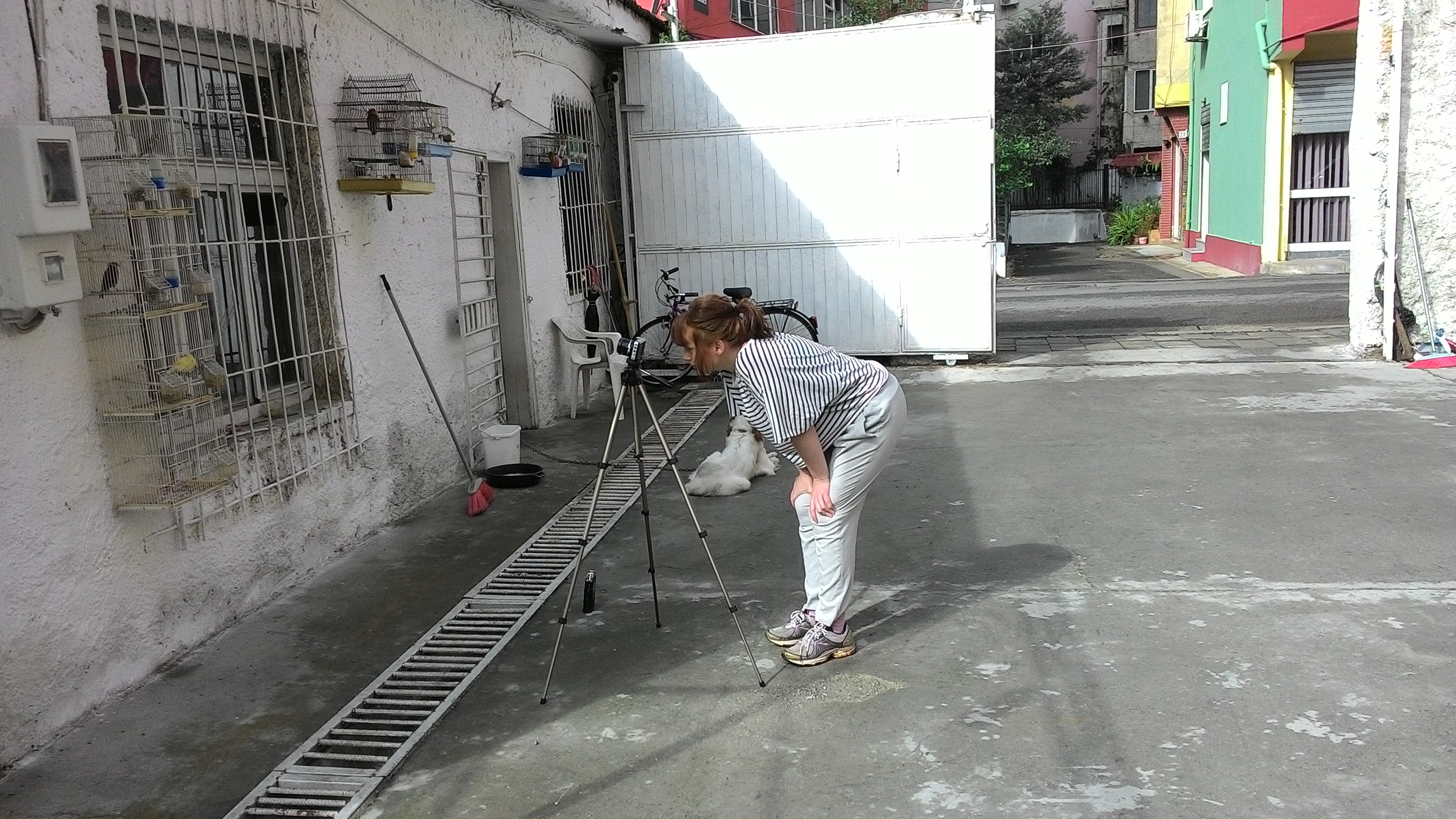
The last days I spend filming in the company of Ina Havaraj the bass player of PMS, searching for older issues of the book and meeting all the people I got to know during my stay. I was able to attend the beautiful opening of the exhibition “To inflame myself, I recall Byron´s dress” by Austrian Artist Thomas Hörl at Zeta Gallery, went to the exhibition of Berlin based artist Silva Agostini, who showed two video works at MIZA Galeri, and joined the (re)opening of the culture center Tulla, which is a very nice mixture of an exhibition and music venue, run by Rubin Beqo, who also set me in contact with the band PMS.
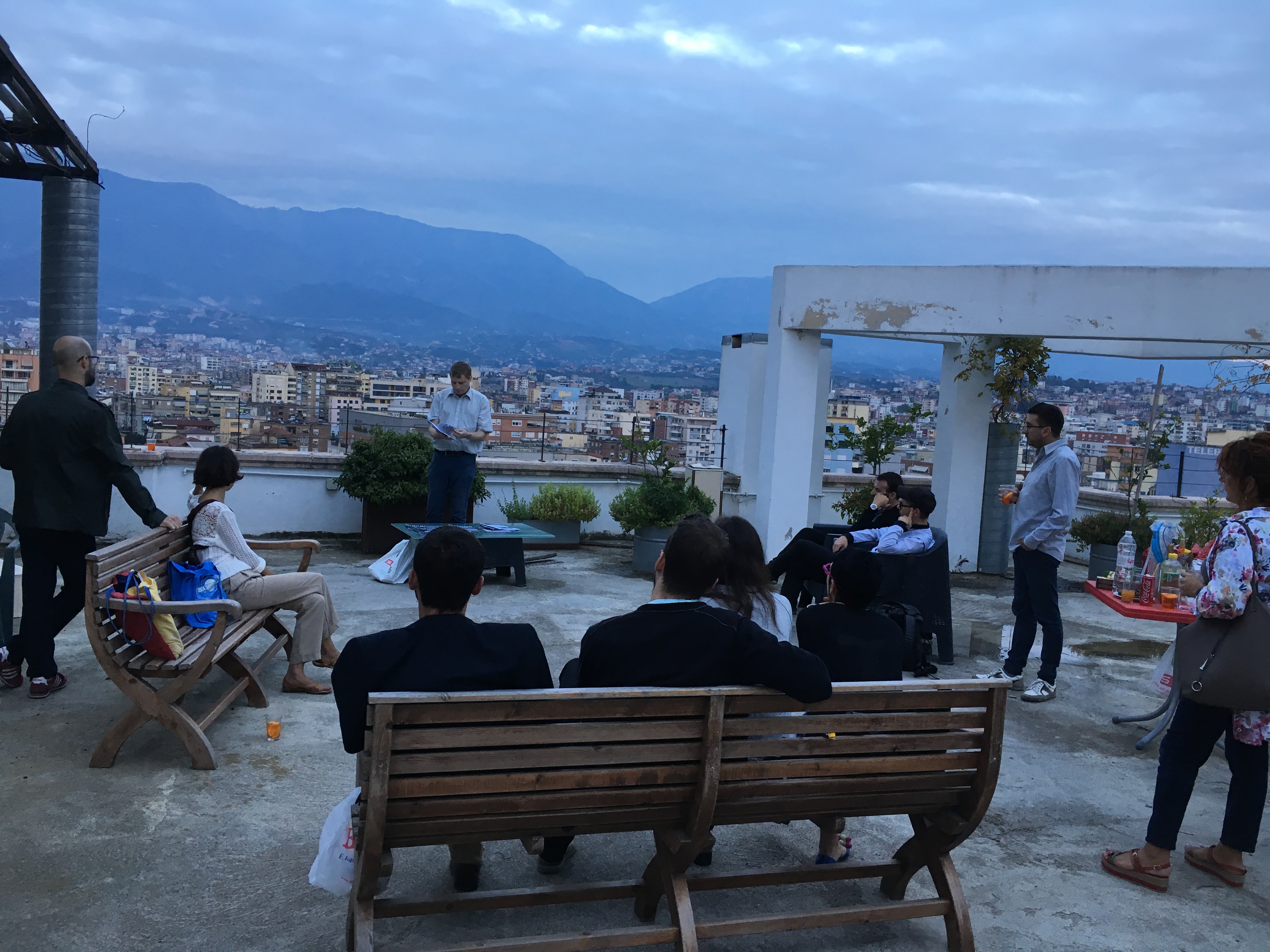
Moreover we organized a studio visit and farewell gathering on our studios terrace for which I invited the Vienna Berlin based artist Fanzine ztscrpt.net to present their latest issue Spiegel. It again has been a wonderful evening with a lot of communicative exchange that makes it even harder to leave. I am extremely thankful to < rotor > and the West Balkan Calling program, T.I.C.A. and all the people who helped organizing this very productive interchange.
To my joy I will return on the 8th of November for an exhibition curated by Stefano Romano to present some of my first outcomes of my project in Tirana.
3rd week
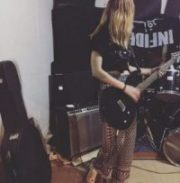
I am in the middle of my stay here in Tirana and very happy and overwhelmed to have met the local young feminist punk band PreMenstrualSyndrom (Ersilda Hasa – Vocal; Orkida Braculla – Guitar; Ina Havaraj – Bass; Uendi Pustina – Drums).
Each of them is going to read some pages of the book to me and moreover they showed me their favorite hang out spot and their rehearsal room. I visited them to film them during their rehearsing for the city’s celebration of 100 years of DADA. For that fest they decided to switch instruments, a practice I did for years in my own music-related projects and that throws one back to concentrate on listening to what the other people play in order to communicate with the sound. They invited me to join their practice which was a beautiful moment of getting to know each other through playing music together.
The band strongly emphasizes on their feminist approach through lyrics and talks we had and I am still amazed that the riot grrrl movement which was a strong influence for my own output in my 20ties is still empowering for young girls to do their own thing. And interesting enough there is hardly any (punk-) music scene in Albania (I was told that there was more going on ten years ago but an heroin-wave destroyed a whole generation of the subculture) not to mention female musicians in punk.
I realized that my project here in Tirana has its sensitive part in the act of listening. While meeting with women of different age for the project we´re not only talking about the content of the book but also the relation of what the pages written mean or do not mean in Albania’s society nowadays. Parallel the protagonist of the book named Dija unfolds as a keen person in my mind while walking through the city after the “reading sessions”.
Hence I decided to add some field recordings of the cities unique soundscape that interlaces with the women’s voices in my head.
Besides my research, I was invited to give a public artist talk together with my colleagues Koja Isufi and Remijon Pronja. It´s been an interesting evening which not only allowed me to see more of Kojas and Remijons work but also to talk about my fields of interest.
Furthermore the film Ftwtf – female to what the fuck by the Austrian Directors Cordula Thym and Katharina Lampert and to which I composed the film music was presented this week at the International Human Rights Film Festival-Albania in Tirana. The documentary FtWTF is a precise encounter with the theme of gender transgression, whereby the gender border is crossed in the same direction each time: from a specific starting point (female/woman) to a temporarily open end point (“what the fuck”) and it was an honour to be present at the screening and little Q & A that took place after the film.
2nd week
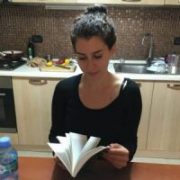
Dija, is the name oft the girl I already got to know a little bit better. The main character of Haki Stermilli’s novel is spooking in my head now for some days. The first 40 pages were retold to me by two different women, in their living rooms. Another woman articulated that when she read the book as a little girl in the 1980s it was very liberating for her.
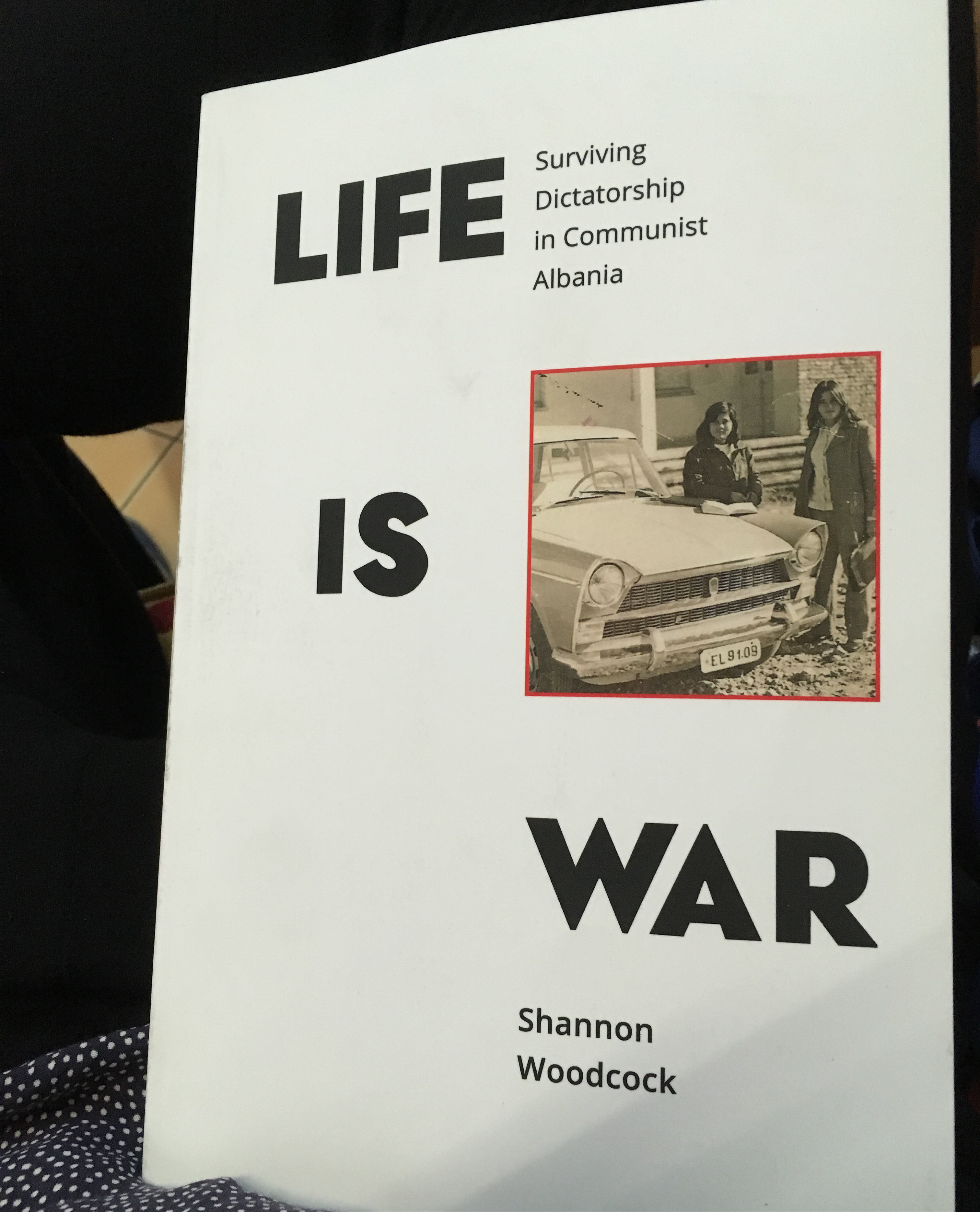
> “The war of classes did not yet have a consistent dynamic”, meaning that the pre-socialist social structures still had value for individual and community relations < it says in the book “life is war- surviving dictatorship in communist Albania” by Shannon Woodcock and indicates that patriarchal structures were still very dominant during Envar Hoxhas dictatorship. “Women remained the caretakers of each family and were still considered the property of their fathers and husbands, even as they fulfilled new roles working full time for national economy.” Woodcock explains in her collection of oral histories that serves me as a complementary perspective of the countries history.
I also started to record the meetings, the re-telling, the personal translation of the book. For the next days, I arranged some more dates with people I hardly know. It is always a little bit intimidating and at the same time extremely comforting to enter someone’s private home to listen to a story. The private act of storytelling by someone who you hardly know. Moreover, the different addresses I have to find by walking through the city are perfect guidelines to experience the small spaces in between the socialists buildings.
Tomorrow I will meet with a young feminist punk band from Tirana. I tried to get in contact with them since I arrived. As I want them to be part of my project right from the beginning I am very excited to meet them.
1st week
Before my plane took off from Viennese ground, the pilot came out of the cockpit and announced in a singing voice and a big smile in two different languages, that his co-pilot has not only the same surname as him, but happens to be his little brother and that they are going to steer for the very first time together through the clouds.
Lucky me it has been a safe and sound ride to Albania.
9 years ago, almost exactly on the same date in September I saw the city of Tirana for the very first time. I was so impressed back then, that the photography I took and the name itself served content for various projects of mine.
Although a lot has tremendously changed since my last visit (new buildings, traffic still insane but with more streetlights, more Raiffeisenbanks, more tourists and a reshaped main square) the same beautiful thick clouds were still hanging around Dajti (the house mountain) and would float from time to time over the city’s landscape directing the beautiful opera building.
I was warmly welcomed by Stefano Romano from T.I.C.A. – Tirana Institute for Contemporary Art, the institution which is hosting me during my residency here. Two other artists share my program, Koja Isufi from Kosovo and Remijon Pronja from Albania.
It was a pleasure to meet them and to see our small but beautiful studio with a wonderful roof terrace providing a perfect view over the city. Right after my arrival they took me to an opening at Zeta gallery and introduced me to the works of Matilda Odobashi & Maksut Vezgishi.
My project during the residency starts with a research about a certain book written by Haki Stërmilli in 1936. Its title “Sikur të isha djalë” (If I were a boy) awoke my interest about a year ago when I read an English article about the book that briefly explained the content (it is written in diary form of the perspective of a little girl who speaks openly about the suffering in a patriarchal society) and declared that it was the first Albanian feminist manifest ever written.
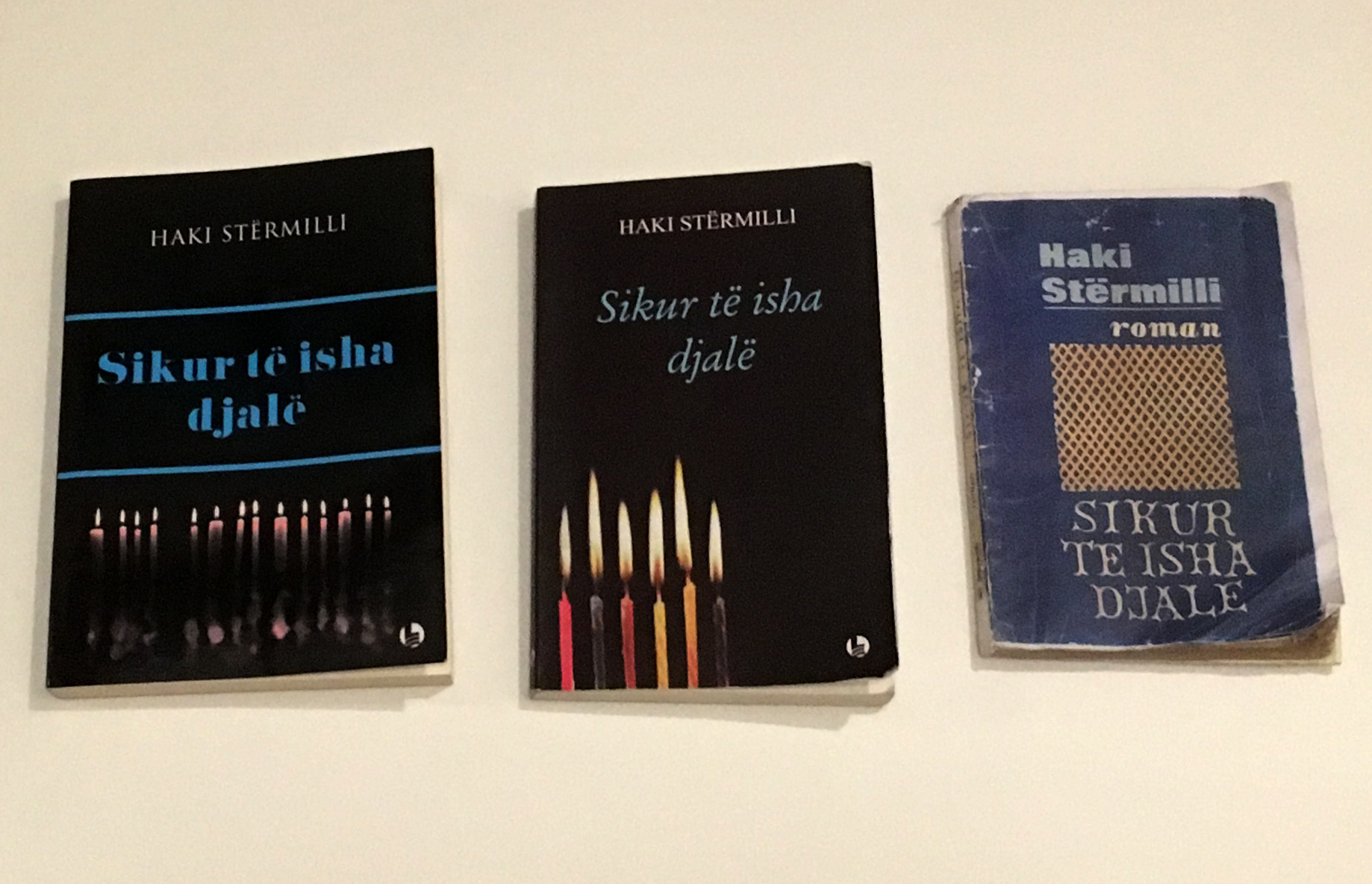
As the book has not been translated yet neither in English nor German I tried to get an Albanian copy for the last couple of months via the Internet. Strangely it didn’t work out. Hence one of the very first things I did in Tirana was going to a bookshop to see if copies are still available. I found a bunch of them released in different times, during communism, but also lately (the book only was reissued in 2012) with different covers, often candles that reminded my strongly of Sonic Youths “Daydream Nation” famous cover by Gerhard Richter. The first days I was searching for booksellers, where I bought different issues and talked with the shop owners and street sellers about it. Almost everyone of the older people knew it, and it was almost every time I received the same reaction when mentioning its title. Their hands move to the heart and a big sigh is followed by a huge smile and words like: “Beautiful, wonderful!”
As I am not able to speak or read Albanian I was sitting in my flat looking at the covers for some time and started to rewrite the title on a paper over and over again.
The next step is to approach myself to the book through people who want to share its content with me. I suggested to a girl I met that we meet at her home and that she reads about 20 pages and then re-tells the content in her words in English to me: A personal translation in an intimate setting. So I am very excited to get to know more about the little girl in the book personated by various people I am going to meet.
[nggallery id=21 template=page]